
Splints, Braces & More
Information about casts, splints, braces, slings, and walking boots used after orthopedic injuries or surgery.
Orthopedic Support Instructions
These instructions provide general information about common orthopedic supports used after injuries or surgery. Please follow the specific instructions provided by Dr. Davis and the orthopedic care team.
Casts
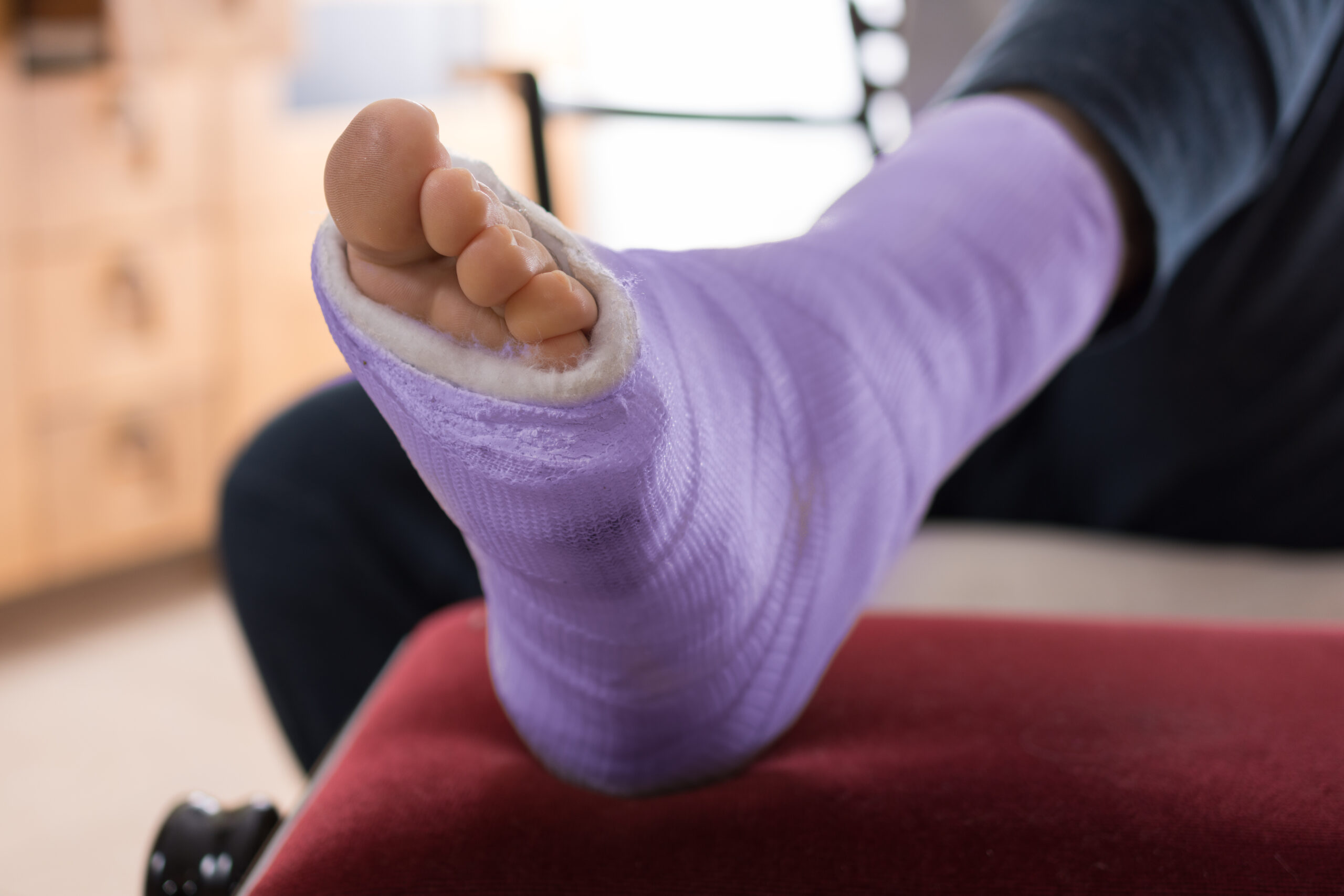
Casts are made of fiberglass or plaster and are used to immobilize a specific joint or area. They must remain dry. You cannot swim, shower, bathe, or rinse them out. Water trapped under the cotton padding can lead to serious skin problems.
Casts should be snug but not tight or restrictive. If you are having swelling and tightness, try elevating the area, preferably higher than the level of your heart. If the cast is too loose, it may not provide adequate protection.
Please call the office if the cast feels too tight, too loose, or is causing problems. If you are having itching under the cast, you may try Benadryl, Claritin, Zyrtec, or another antihistamine.
Splints
Splints are made of fiberglass or plaster and are used to immobilize a specific joint or area. The difference between a splint and a cast is that a cast is wrapped completely around the body part, while a splint is made of strips of fiberglass or plaster. Splints are used primarily after surgery.
You cannot swim, shower, bathe, or rinse them out. Water trapped under the cotton padding can lead to serious skin problems.
Splints should be snug but not tight or restrictive. If you are having swelling and tightness, try elevating the area, preferably higher than the level of your heart. If the splint is too loose, it may not provide adequate protection.
Please call the office if the splint feels too tight, too loose, or is causing problems. If you are having itching under the splint, you may try Benadryl, Claritin, Zyrtec, or another antihistamine.
Knee Braces
Range of Motion Brace:
These are used after a serious injury or postoperatively to allow or restrict range of motion. They are not intended to provide protection for physical activity.
Patella Stabilizing Brace:
This brace is used when your patella or kneecap needs additional protection against dislocation or subluxation.
Unloader Brace:
This brace is used when you have isolated arthritis in one compartment of the knee, usually the medial compartment. The brace is designed to shift the weight-bearing axis away from the arthritic area. These are usually used for someone who is either too young for total knee arthroplasty or is trying to delay total knee arthroplasty.
Functional Knee Brace:
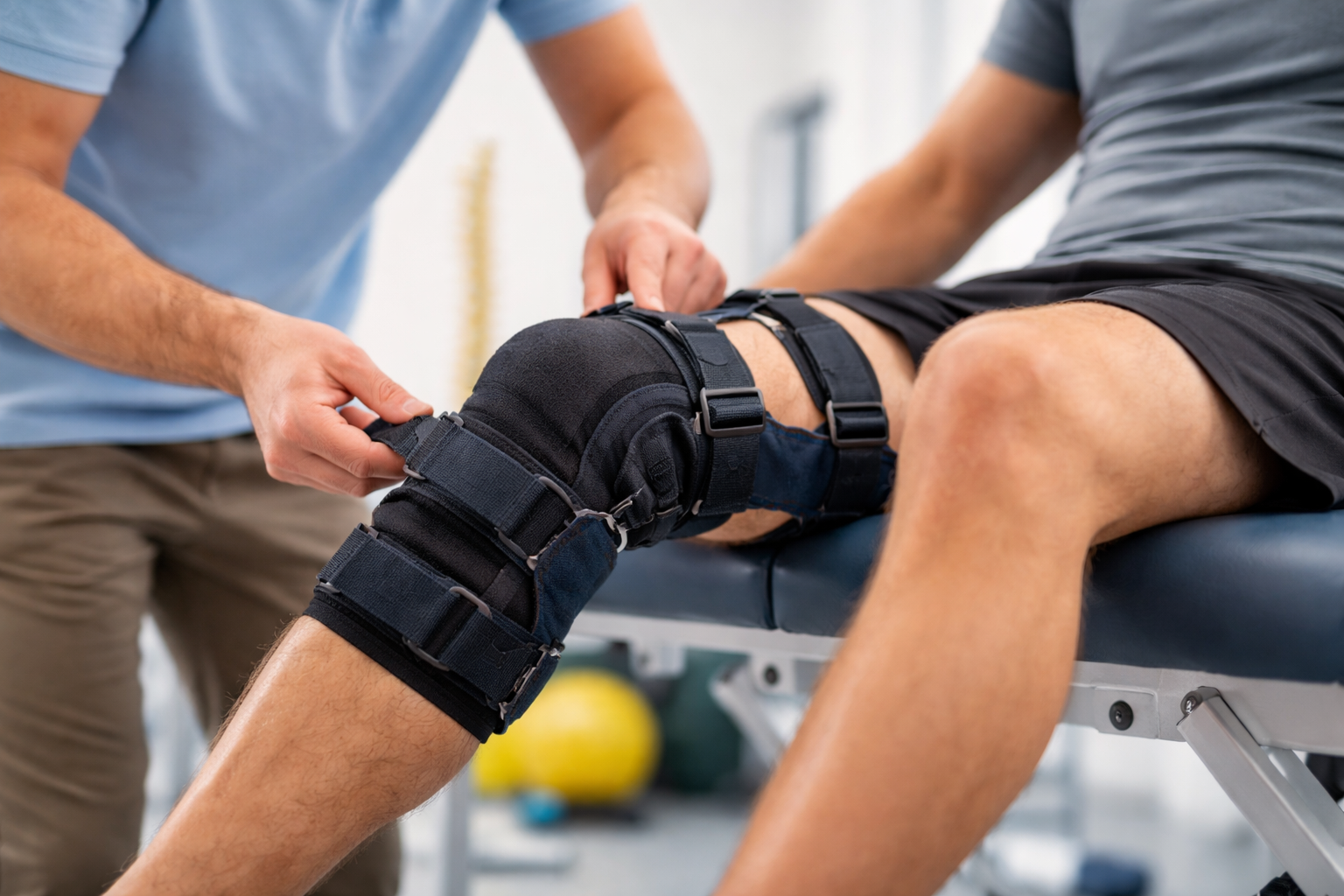
There are many different types of functional knee braces. Depending on your injury, these braces provide additional protection to your knee using straps, hinges, and metal supports. They are meant to be worn during physical activity and should fit well without slipping.
Shoulder Immobilizers / Sling and Swathe
Shoulder immobilizers, slings, and swathes are used after serious injuries or fractures to the shoulder, clavicle, or humerus. They usually consist of a sling and swathe. The swathe is a strap that wraps around the body and keeps the arm or shoulder from moving.
Shoulder Slings
A shoulder sling is used after a serious injury, fracture, or surgery. Some slings may include a pillow that rests between the sling and the rib cage. They are used to prevent you from using your shoulder and allow it to rest during recovery.
You should not operate a motor vehicle while wearing a sling.
Elbow Braces
Counterforce Tennis Elbow Strap:
This brace is used to help spread out the forces at the wrist tendons’ insertion point. It is worn just past the elbow and should be snug.
Elbow Range of Motion Brace:
These are primarily used after a serious elbow injury or surgery. They allow or restrict range of motion. They are not intended to provide protection for physical activity.
Ankle Boots / Walker Boot / Moon Boot
Ankle boots, walker boots, and moon boots are rigid, removable boots used after serious injury or surgery. They provide protection and stability to the ankle and lower leg.
Depending on your phase of recovery, you will be instructed whether you are partial weightbearing, full weightbearing, or non-weightbearing. You can remove the boot for bathing. Most boots have padding that can be removed and cleaned.
Ready to Make an Appointment?
Schedule an appointment with Dr. Franky Davis and his orthopedic care team in Moultrie, GA.